When we make choices, are these choices free? That is, are we able to choose one thing over another, to do one thing rather than another, independent of the laws of physics, including the biology and chemistry of our bodies and brains? Or are all of our choices determined by processes that could, in theory, be traced back to deterministic causes, if only we had enough information?
Whether we are free in our willing or not, does it matter? And if so, why?
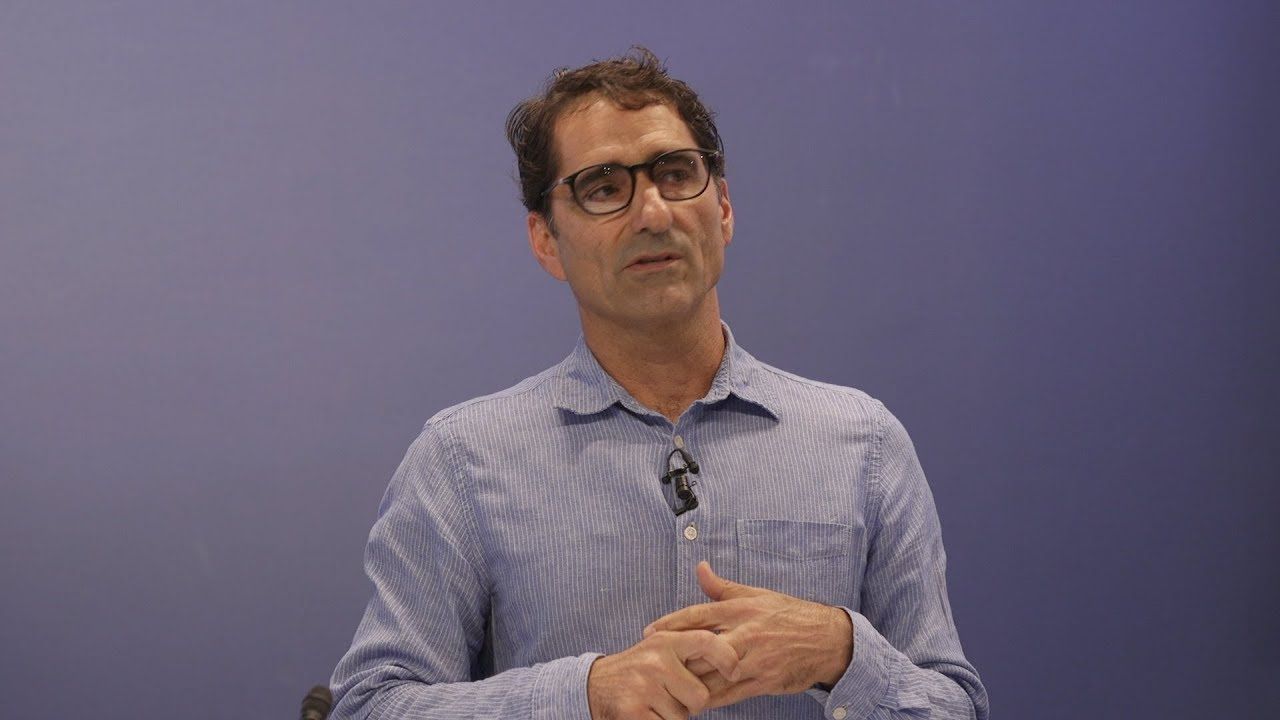
This week, we are joined by Prof. Mark Balaguer of California State University, Los Angeles to talk about not only whether we are our free, but how free we are, and why it matters that we think more seriously about what we understand “free will” to entail.
In this episode, we discuss the following thinkers/ideas/texts/etc.:
- Mark Balaguer, Metaphysics, Sophistry, and Illusion (2021)
- Mark Balaguer, Free Will (2014)
- Mark Balaguer, Free Will as an Open Scientific Question (2010)
- Mark Balaguer, “How We Could Have Libertarian Free Will Even if God Were a Know-it-all About the Future” (forthcoming in Canadian Journal of Philosophy)
- Gottlob Frege, The Foundations of Arithmetic (1884)
- Philip Badger, “Materialism, Freedom, and Ethics” (Philosophy Now, January 2024)
- Luco Fanelli, “Determinacy, indeterminacy, and dynamic misspecification in linear rational expectation models” (Journal of Econometrics, 2012)
- Quantum indeterminacy
- Probabilistic causation
- Felipe De Brigard and Walter Sinnott-Armstrong, “Introduction: Neuroscience and Philosophy” (MIT Press, 2022)
- Quantum Approaches to Consciousness
- Mind-Body dualism
- Causal determinism
- Compatibilism
- Ockham’s Razor
- Plato, Phaedo
- Immanuel Kant, Critique of Practical Reason (1788)
- Agent causation theory (aka, “Libertarian freedom”)
- Peter van Inwagen, Essay on Free Will (1983)
- Humean freedom (a la David Hume)
- Conceptual engineering
- Thomas Hobbes, “On Freedom” (Part III of Leviathan, 1651)
- Balaguer’s description of “torn decisions”
- Interpretations of probability
- Buridan’s ass