
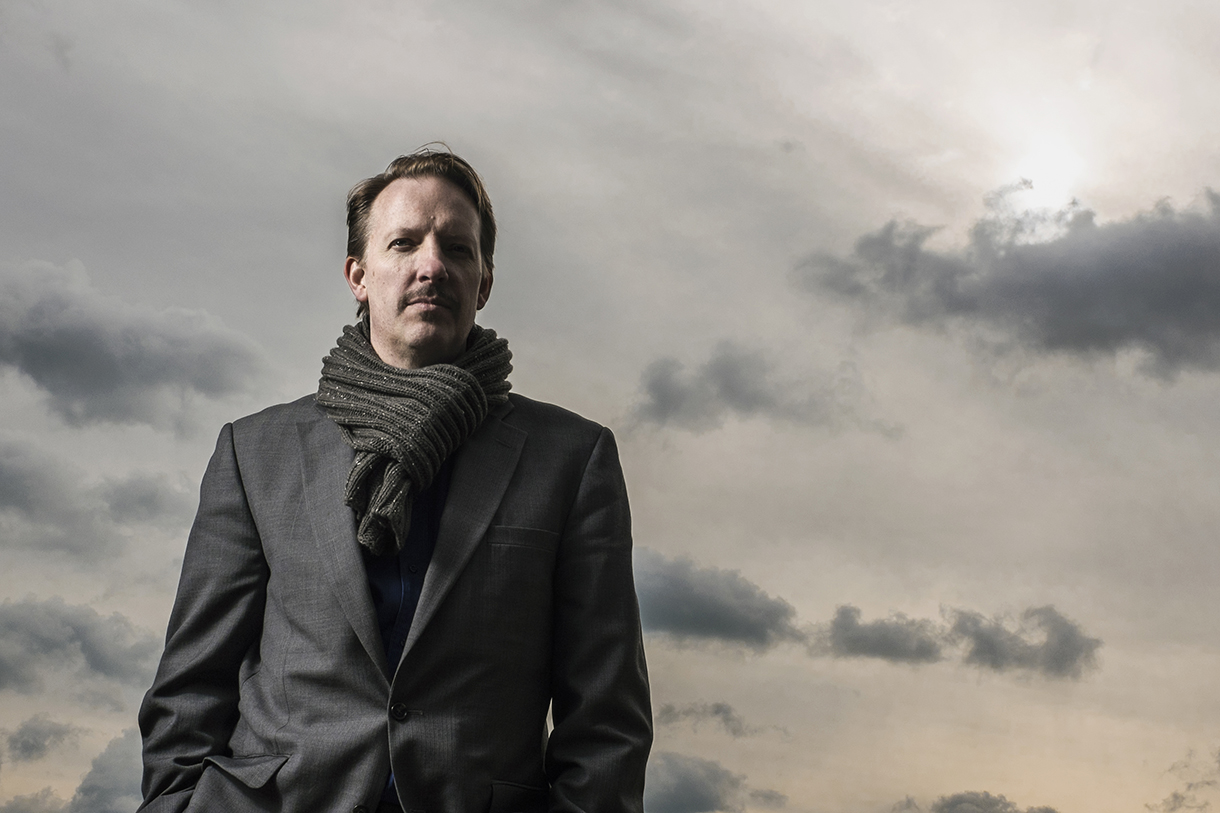
The imagination has regularly been subordinated to so-called “rational” or “scientific” models of thought. This week, we’re joined by Stephen T. Asma (Columbia College, Chicago), who argues that imagination has deep, perhaps pre-linguistic, roots that ought to be recovered.
What if we re-centered the powers of imagination, rooted in imagistic thinking and bodily gestures (like dance), instead of dismissing them as mere “fancy”?
Drawing on the esoteric tradition, Asma leads us through an interesting alt-history of human thought and, in doing so, gives us reason to pause and re-think our prejudice against imaginative thinking.
This week’s jukebox selections:
Jen’s pick: “Nice to Meet You” by Myles Smith
Leigh’s pick: “Rainbow Connection” by Kermit the Frog (music and lyrics by Paul Williams and Kenneth Ascher)
Bob’s pick: “Imagine” by John Lennon
Steve’s pick: “Mean Old World” by Little Walter
In this episode, we reference the following thinkers, ideas, texts, etc.:
- Paul Giamatti’s CHINWAG with Stephen Asma (podcast)
- Professor Asma’s Guide to Unusual Knowledge (podcast)
- Immanuel Kant’s account of the imagination, in Critique of Pure Reason (1781), § 20 et al.
- Stephen T. Asma, Evolution and the Imagination (2017)
- Walt Disney
- Hayao Miyazaki
- John D. Norton, “Chasing a Beam of Light: Einstein’s Most Famous Thought Experiment” (2005)
- The Western esoteric tradition
- Neoplatonism
- Plotinus
- Porphyry
- Hermes Trismegistus
- Marsilio Ficino
- Aleister Crowley
- Madame (Helena) Blavatsky
- Plato’s Republic
- Charles Darwin
- Neurodiversity
- Aphantasia
- Ruth Milikan
- Maurice Merleau-Ponty, The Visible and the Invisible (1969)
- Edmund Husserl, Ideas for a Pure Phenomenology and Phenomenological Philosophy (1913)
- Evolutionary psychology
- New Mexico’s Petroglyph National Monument
- Pablo Picasso’s “cave painting” art
- Stephen T. Asma, “Imaginology” (Aeon, 2022)
- Carl Jung’s “depth psychology”
- William Blake
- Suhrawardi and the Sufi philosophy of Illuminationism
- Henry Corbin, “Mundis Imaginalis or the Imaginary and the Imaginal” (1964)
- Wassily Kandinsky
- Synesthesia
- Wassily Kandinsky, On the Spiritual in Art (1964)
- Alexander Kojève, “The Concrete Paintings of Kandinsky” (1936)
- Ursula K. Le Guin
- Charles Dickens, A Christmas Carol (1843)
- Arthur C. Clarke
- Stanley Kubrick
- Carl Sagan
- Hotel Bar Sessions Season 2 episode on “Conspiracy Theories” (Episode 21)
- The Wiccan religion (distinct from Paganism, an umbrella term for many pre-Christian, nature-based religions)
- Stephen T. Asma, On Monsters: An Unnatural History of Our Worst Fears (2011)
- Traditional Chinese medicine
- Rami Gabriel, “What Kind of Monster is Artificial Intelligence?” (2023)
- The Epic of Gilgamesh
- Agentic Artificial Itelligence
- AI’s so-called “hallucinations”
- Medusa
- Blemmyes
- Cephalus
- Vagina Dentata
- “Tripping with William Shatner,” CHINWAG podcast with Paul Giamatti and Stephen T. Asma (2023)
- David Lynch
- Cognitive entropy
- Tamar Szabo Gendler, “The Puzzle of Imaginative Resistance” (2000)
- Immanuel Kant, Critique of Judgment (1790)
Like and Follow Hotel Bar Sessions!
Stay current with our most recent episodes, behind-the-scenes updates, announcements, and more! Follow us on your favorite platforms below:
Support Us on Patreon!
Enjoying our conversations? Keep them going by supporting Hotel Bar Sessions on Patreon. Your support helps us bring fresh content, deeper discussions, and exclusive perks for our community.