
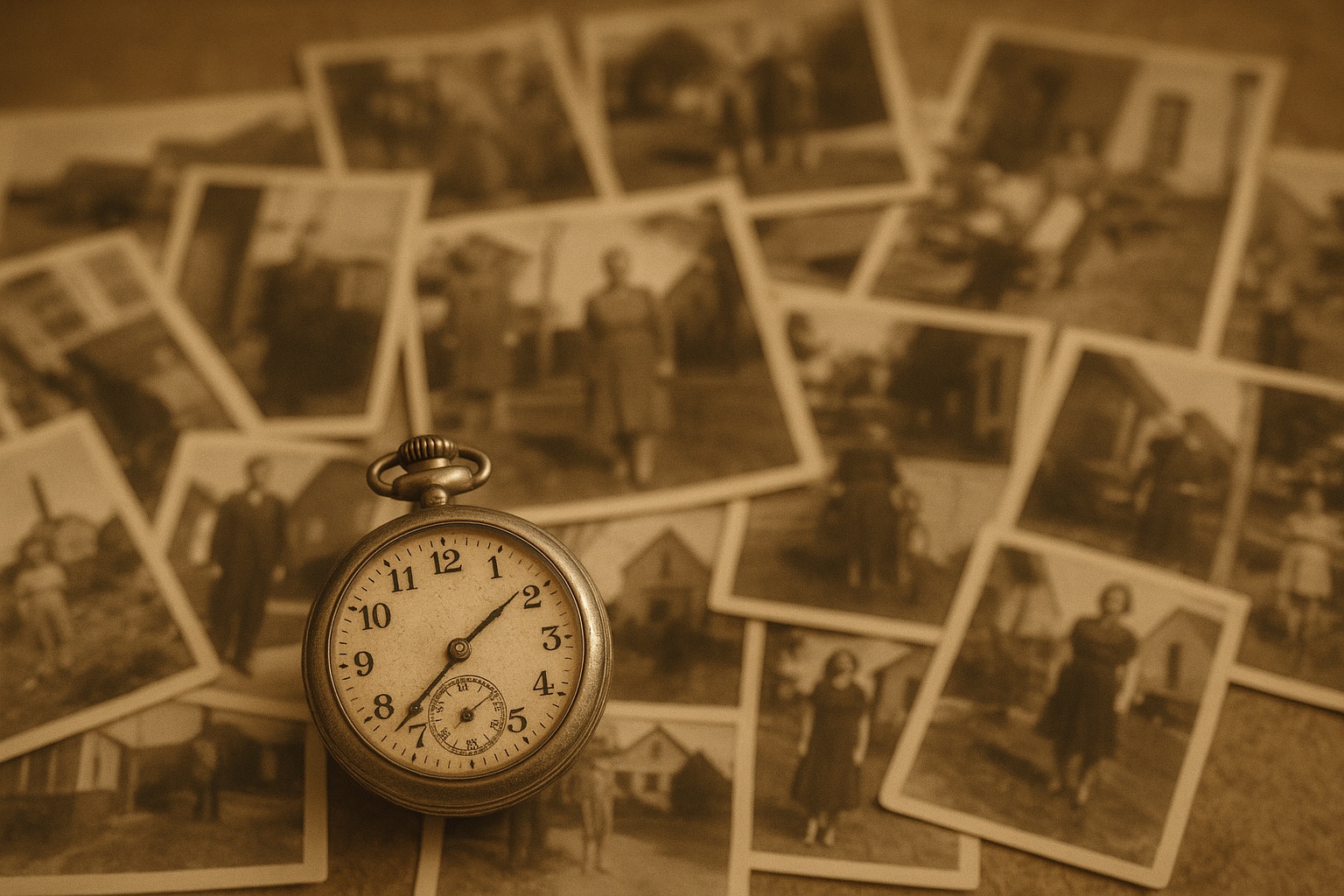
“Nostalgia” is a portmanteau coined in 1688 by Johannes Hofer, combining the Greek nostros (homecoming) and algos (pain, ache). Hofer was a medical student, and he invented this term to describe a kind of melancholia, a somewhat depressive state–- and so, from its inception, “nostalgia” was viewed as a mood disorder. For the Romantics, it was a sentimentality for the past, the good old days of yore, combining the sadness of loss with a joy that that loss is not complete or total. Nostalgia is often paradoxical, because the past we long for and re-member is a past that was never present. If it is a “homecoming,” what one discovers in returning home, as Odysseus does, is that there is no “there” there.
Nostalgia is also unheimlich (“unhomely”) or more accurately, “uncanny.” It always involves a manner of self-deception about what was by distorting or idealizing the past. This can often have negative, even dangerous consequences: individually, socially, and politically. Much more than just a “mood,” nostalgia is a vector of philosophical investigation par excellence that opens onto a wide range of themes: memory, time, the hermeneutics of personal identity, and even reality itself.
So, pour a drink, and let’s see what might be problematic about what we “fondly remember”!
This week’s jukebox picks:
- From Bob: “Back to the Old House” by The Smiths
- From Jen: “Werewolves of London” by Warren Zevon
- From Leigh: “Fire and Rain” by James Taylor
In this episode, we reference the following thinkers, texts, ideas, etc:
- Lisa Winter, “Death by Nostalgia” on the history of nostalgia as a medical diagnosis (TS Digest, 2022)
- Clay Routledge, “Why Gen Z is Resurrecting the 1990s” (New York Times, August 2025)
- Happy Days (TV Series, 1974-1984)
- Veronica Espoito, “Sehnsucht” (World Literature Today, 2023)
- Freud, “The Uncanny” (1919)
- Marcel Proust, In Search of Lost Time (1913)
- “touch grass“
- Jacques Derrida, Spectres of Marx (1993) on “hauntology”
- Thomas Reid‘s 1685 “brave officer paradox” (in Essays on the Intellectual Powers of Man) in response to John Locke‘s account of personal identity in his 1690 Essay Concerning Human Understanding (Book II.xxvii.10).
- U.S. Supreme Court’s “I know it when I see it” ruling in re pornography
- Albert Camus, The Myth of Sisyphus (1942)
- Phenomenology
- Martin Heidegger
- Jean-Paul Sartre
- Maurice Merleau-Ponty
- Emmanuel Levinas
- Immanuel Kant’s transcendental idealism (including the distinction between noumena and phenomena)
- Jean-Jacques Rousseau, Confessions (1782)
- St. Augustine, Confessions (~397-400 C.E.)
- Friedrich Nietzsche, Ecce Homo (1908)
- Geoffrey Bennington and Jacques Derrida, Circumfessions (1999)
- hagiography
- The connection between smells, memory, and health
- On the implicit “conservatism” of nostalgia, see our Season 1, Episode 7 conversation about “Nostalgia”
- Martin Heidegger, The Question Concerning Technology (1954)
- J.R.R. Tolkien, The Lord of the Rings
- Stranger Things (TV series, Netflix, 2016-2025)
- Theodor Adorno and Max Horkheimer, The Culture Industry: Enlightenment as Mass Deception (1944)
- Star Trek (TV series, 1966-1969)
- Star Trek (Film, 2009)
- Star Wars (Films, 1977-2015)
- The West Wing (TV series, 1999-2006)
- Also check out HBS Season 1, Episode 7 conversation about “Nostalgia” (with co-hosts Ammon Allred and Shannon Mussett)
Like and Follow Hotel Bar Sessions!
Stay current with our most recent episodes, behind-the-scenes updates, announcements, and more! Follow us on your favorite platforms below:
Support Us on Patreon!
Enjoying our conversations? Keep them going by supporting Hotel Bar Sessions on Patreon. Your support helps us bring fresh content, deeper discussions, and exclusive perks for our community.