
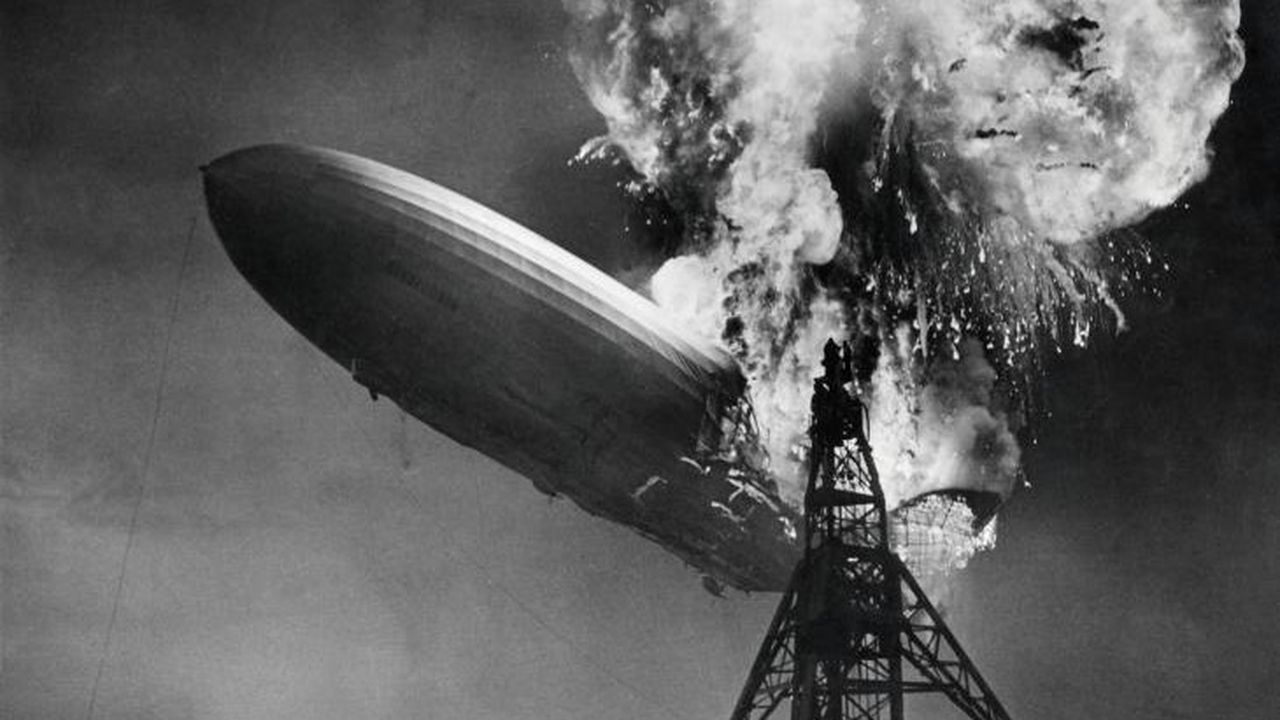
Catastrophe usually sounds like a synonym for disaster—but in this episode, it’s treated as a philosophical concept: a “downturn” that scrambles a world’s legibility and forces a basic question—what can still be believed now? Starting from Greek tragedy (where catastrophe names a plot’s turning point), the conversation traces how ruptures—ancient, modern, natural, political—expose finitude and test the limits (and complicities) of inherited frameworks of reason.
From there, the episode pivots into a philosophy of catastrophe: the work of making horrors intelligible by clarifying the structures that made them possible, while also asking what catastrophe demands ethically—what must never happen again, and what that imperative requires of living, thinking, and teaching after rupture.
Finally, the episode debates philosophy as catastrophe: whether certain ideas don’t merely respond to downturns but actively produce them by breaking prior worlds of sense—recasting what counts as knowledge, power, nature, and the human. The conversation closes with an unsettling contemporary candidate: LLM-generated “philosophy papers” as a potential wheel-smashing shift in how philosophy is produced, circulated, and evaluated.
This week’s jukebox picks:
Jen’s pick: “I Write Sins Not Tragedies” by Panic at the Disco!
Bob’s pick: “It’s The End of the World As We Know It (And I Feel Fine)” by R.E.M.
Leigh’s pick: “Pop Goes The Weasel” (Traditional)
In this episode, we discuss the following thinkers, ideas, texts, etc.:
- Aeschylus, The Oedipus Trilogy
- Plato, Apology
- The 1755 Lisbon earthquake
- Voltaire, Candide (1759)
- Immanuel Kant, The Critique of Judgment (1790)
- Stoicism
- Mt. Vesuvius eruption and the destruction of Pompeii (79 CE)
- The Black Death (1347-1351 CE)
- Antinatalism
- Hannah Arendt, The Origins of Totalitarianism (1951)
- Theodor Adorno on poetry after Auschwitz
- Martin Heidegger, “The Question Concerning Technology” (1954)
- Heidegger’s Nazism
- The 2025 California wildfires
- Karl Marx’s dialectical materialism
- Friedrich Nietzsche, The Genealogy of Morals (1887) and Thus Spake Zarathustra (1883)
- Michel Foucault, The Birth of Biopolitics (1979)
- Jacques Derrida, “Differance” (1968)
- Anthropocene
- Ursula K. Le Guin
- The ethics of using AI in philosophical research
Like and Follow Hotel Bar Sessions!
Stay current with our most recent episodes, behind-the-scenes updates, announcements, and more! Follow us on your favorite platforms below:
Support Us on Patreon!
Enjoying our conversations? Keep them going by supporting Hotel Bar Sessions on Patreon. Your support helps us bring fresh content, deeper discussions, and exclusive perks for our community.