We’ve talked about the attention economy more than once on this podcast, and the diagnosis hasn’t changed: nearly everything around us is built to capture our attention and then sell it. What we haven’t asked is what all that scrambling is supposed to be rescuing us from. The answer, it turns out, is boredom. Nobody pays cash to be bored and no app is designed to deliver it, yet a small but noticeable number of young people are now trading smartphones for flip phones and forming “Luddite clubs,” as if boredom were something you had to go out of your way to find. Boredom appears to be unbearable and endangered at the same time.
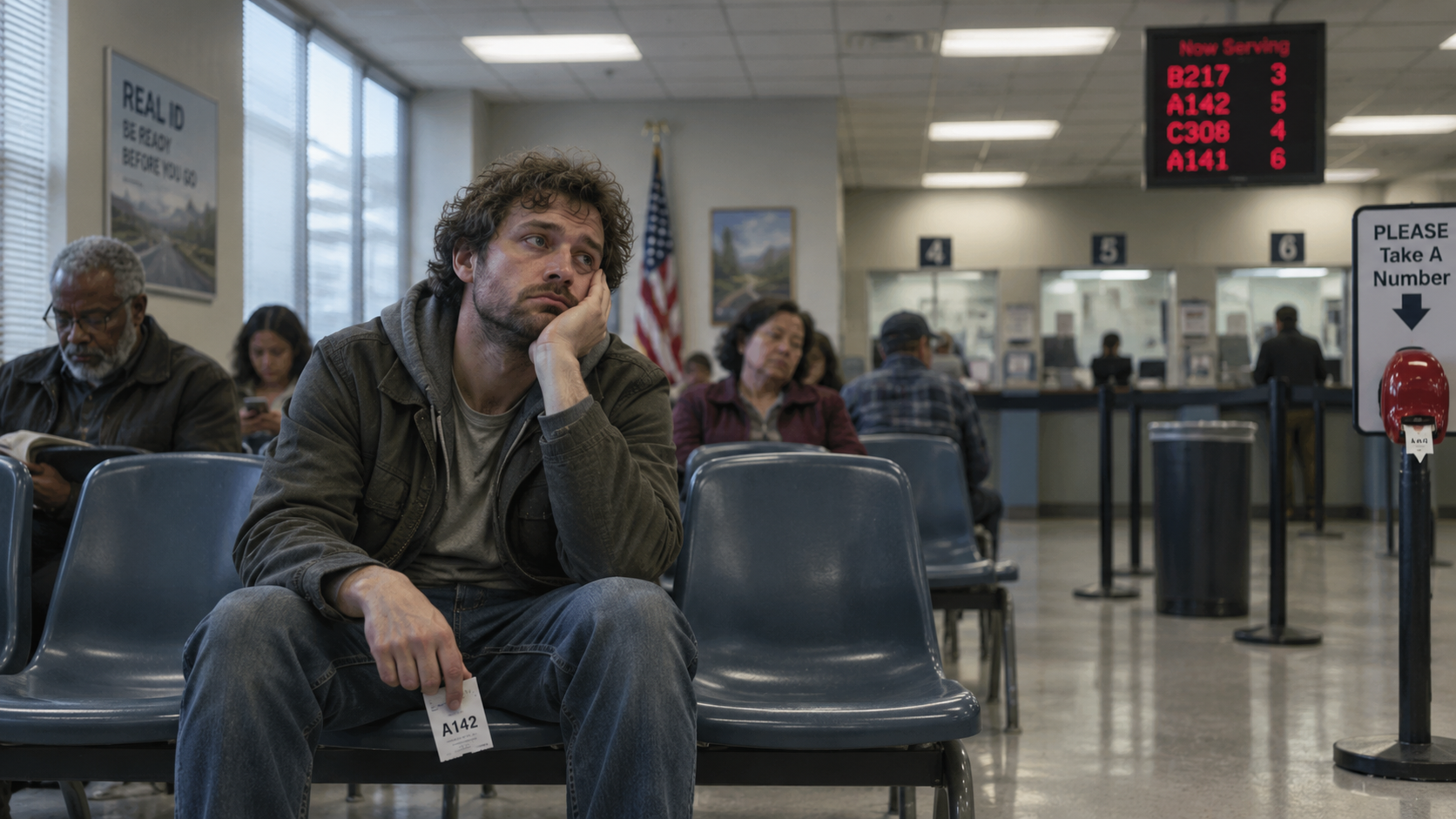
So what, if anything, is worth defending in it? Is the boredom of the DMV waiting room the same thing as the boredom of a committee meeting, or the boredom of a long walk with nothing to look at? If boredom really does free up the mind for reflection and imagination, doesn’t that mean we’ve stopped being bored the moment the good stuff starts? And when people praise the restful, restorative kind of boredom, are they describing an experience available to everyone, or a luxury only some of us can afford?
No guest this week, just three co-hosts who turn out to disagree about nearly all of it. Bob comes to the defense of boredom by way of Heidegger’s “profound boredom” and Kierkegaard’s advice to rotate your pleasures like crops. Jen keeps returning to Aquinas and the medieval worry that boredom is a failure to train one’s own mind, which makes it something closer to a vice. Leigh confesses that she is allergic to the whole thing and cannot find anything good in boredom that isn’t secretly a description of its cure. Along the way you’ll hear about racing raindrops on a school bus window, camp kids left to their own devices, Dorian Gray, and why immortality might be the most boring thing imaginable.
Grab a drink and join us as we spend an hour trying to say something interesting about the one thing nobody can sell you.
In this episode, we discuss the following thinkers/texts/ideas/etc.:
- Hotel Bar Sessions, “Episode 80: Attention and Distraction”
- Alex Vadukul, “‘Luddite’ Teens Don’t Want Your Likes” (New York Times, December 15, 2022)
- Martin Heidegger, The Fundamental Concepts of Metaphysics: World, Finitude, Solitude
- Jonathan L. Zecher, “Acedia: the lost name for the emotion we’re all feeling right now” (The Conversation)
- Michel de Montaigne, Essays
- Blaise Pascal, Pensées
- Thomas Aquinas, Summa Theologiae, II-II, Q. 35, “Of Sloth”
- Andrew Solomon, The Noonday Demon: An Atlas of Depression
- Edgar Allan Poe, “The Imp of the Perverse”
- Katy Y. Y. Tam and Michael Inzlicht, “Fast-Forward to Boredom: How Switching Behavior on Digital Media Makes People More Bored” (Journal of Experimental Psychology: General, 2024)
- Rachel Carlson, “‘Digital switching’ between videos can make you more bored, not less” (NPR, August 23, 2024)
- Søren Kierkegaard, Either/Or, Part I (“Rotation of Crops”)
- Oscar Wilde, The Picture of Dorian Gray
- Des Bishop, Of All People (comedy special, 2024)
- Kalhan Rosenblatt, “What is the ‘Gen Z stare’?” (NBC News, July 2025)
- Jean-Jacques Rousseau, Reveries of the Solitary Walker
- Robert Louis Stevenson, “Happy Thought” (from A Child’s Garden of Verses)
- Franz Kafka, The Trial
- Alex Cox, Sid and Nancy (Film, 1986)
Like and Follow Hotel Bar Sessions!
Stay current with our most recent episodes, behind-the-scenes updates, announcements, and more! Follow us on your favorite platforms below:
Support Us on Patreon!
Enjoying our conversations? Keep them going by supporting Hotel Bar Sessions on Patreon. Your support helps us bring fresh content, deeper discussions, and exclusive perks for our community.