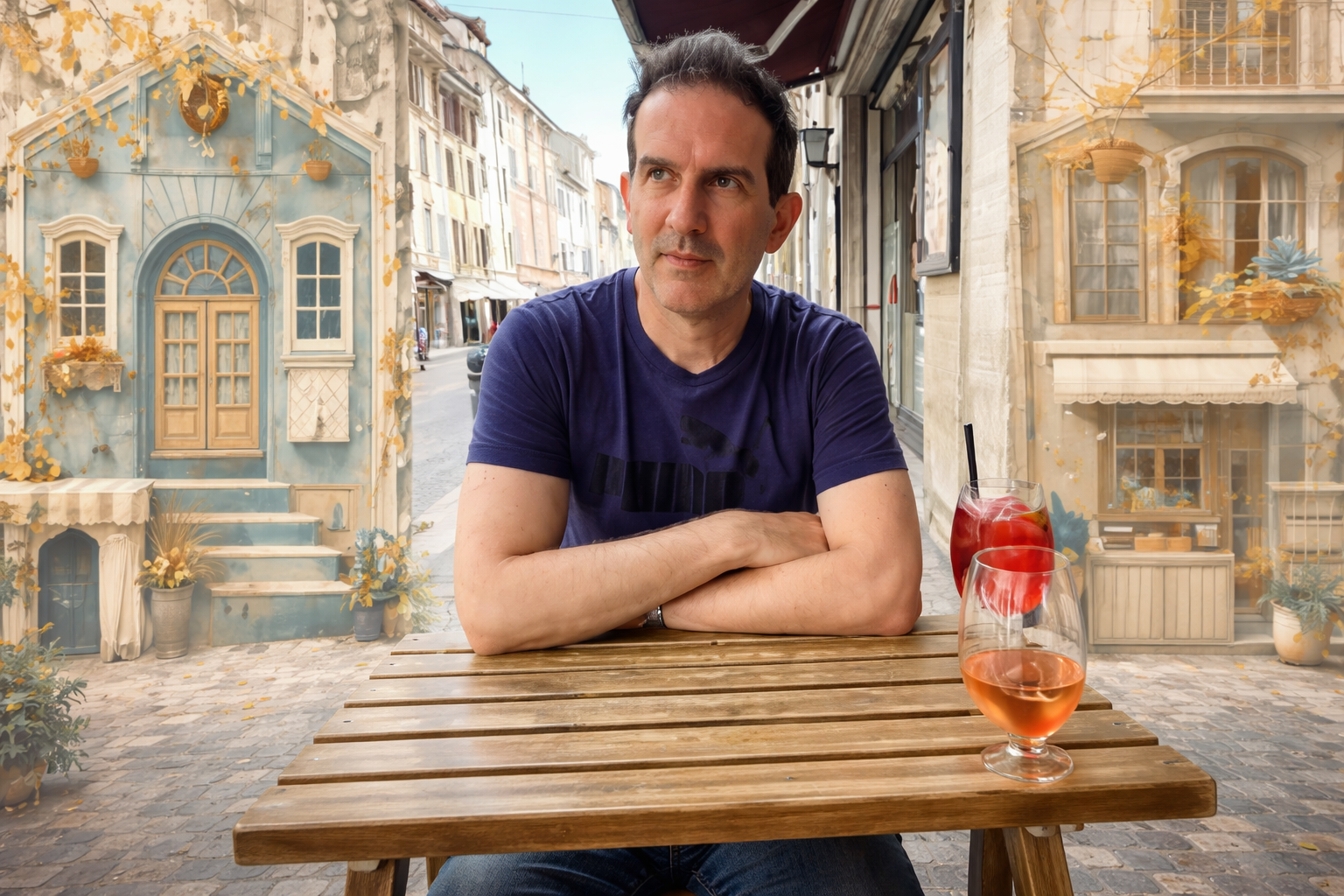
This week, our co-hosts are joined at the bar by Dr. Robert T. Valgenti, philosopher and professor at the Culinary Institute of America to talk about food, the “gastronomic event,” the ethics and politics of cooking and eating, and what it means to be human.
Amuse-bouche: Tonight we’re talking about food! The episode is, as usual, divided into three parts. We don’t discuss famous food metaphors that philosophers often use to talk about other things, such as Proust’s madeleine as a way to discuss memory and the thickness of experience. Instead, in the first part, we ask what a “philosophy of food” is–what are the major questions that might be of interest to philosophers …. In the second part we talk about how food studies broadly construed might invite us philosophers to rethink some of our categories and approaches to philosophical questions. And finally, we’ll ask our guest Bob Valgenti of the Culinary Institute of America what the heck a philosopher is doing there.
First Course: We invite you to taste a veritable sampler plate of appetizing questions about the philosophy of food in this first segment. There are ethical questions about what we should and should not eat, how we should treat labour in the food industry, and about the good life. There are also ontological and materialist questions about the body, aesthetic experiences (is food art?), epistemological questions (is it cake? What is taste and can it be shared), and social-critical questions about gender, race, disability, environmentalism, etc., what it means to “break bread together,” and how food contributes to the confection of identity. The bigger question, though, is how to think about food reshaping philosophy itself?
Second Course: Reflections of the power and politics of food are next on the menu, how are food systems structured? What impact does that have on the body and one’s sense of self? And what then does that mean for “the self” as such? What kind of experience of taste and sensory pleasure can AI have or understand? If ingesting food changes our sense of self, how does cooking and consumption transform matter, the material?
Third Course: There’s a lot of meat in this one! What is a gastronomic event? And what does this have to do with the meaning of human being? DOes philosophy of food as a gastronomic event undermine the cartesian/kantian mode of the autonomous rational subject? If recipes are schematics, what role does improvisation play? Our stomachs are full from such nourishing discussion.
Dessert Plate: Some authors we mentioned whom might want to check out:
- Pellegrino Artussi, Science in the Kitchen and the Art of Eating Well (multiple editions)
- Charles Spence, Gastrophysics: The New Science of Eating (Penguin, 2018)
- Jane Bennet, “Edible Matter” in her book Vibrant Matter: A Political Ecology of Things (Duke UP, 2010)
- Lisa Heldke, Parasitic Personhood and the Ontology of Eating Well (Routledge, 2026)
- Corine Pelluchon, Nourishment: A Philosophy of the Political Body (Bloomsbury Academic, 2019)
- Caroline Korsmeyer, Making Sense of Taste: Food and Philosophy (Cornell UP, 1999)
- Gianni Vattimo on the event and its relation to aesthetics (key works: The End of Modernity: Nihilism and Hermeneutics in Postmodern Culture (1988) and The Adventure of Difference: Philosophy after Nietzsche and Heidegger (1993), inter alia).
The Espresso: Check the work of our guest Bob Valgenti on his Academia.edu page
Like and Follow Hotel Bar Sessions!
Stay current with our most recent episodes, behind-the-scenes updates, announcements, and more! Follow us on your favorite platforms below:
Support Us on Patreon!
Enjoying our conversations? Keep them going by supporting Hotel Bar Sessions on Patreon. Your support helps us bring fresh content, deeper discussions, and exclusive perks for our community.