
We recorded this episode of Hotel Bar Sessions podcast on the eve of the midterm elections, so the ballot is never far from the conversation and these questions reach well past any single election. However, we did not know how dramatic November 2, 2026 would turn out to be.
Well done, American voters!
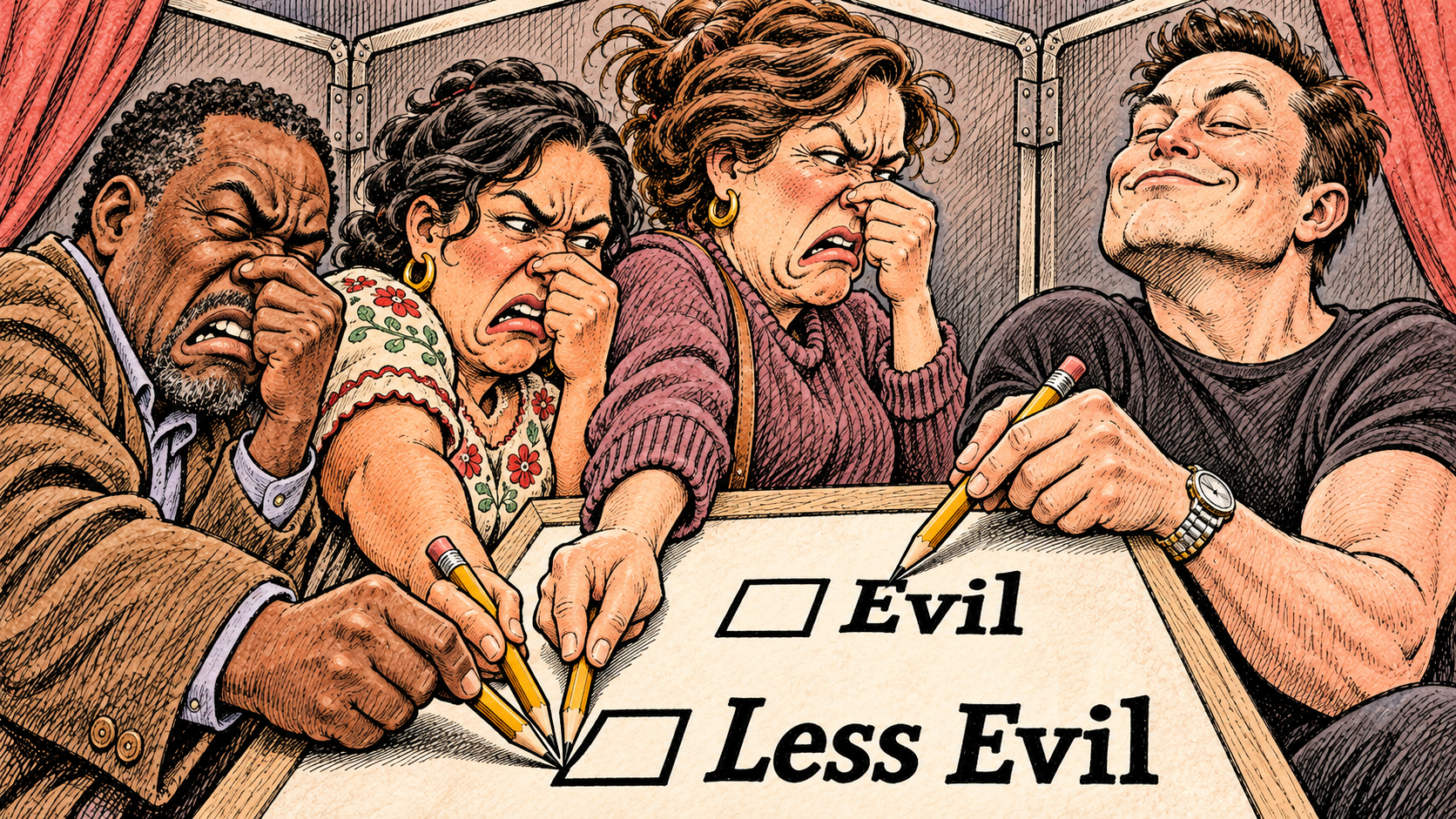
Every election season brings the same advice: hold your nose and choose the lesser of two evils. We reach for it to explain why we stay on platforms we can’t stand, and why decent people sign on to serve leaders they fear. Over time, settling for the less bad option started to look like moral maturity.
If you pick the less bad of two bad options, have you done something good? Is there a real line between the very bad and the evil, and can evil come in smaller and larger portions? When the best available choice still causes harm, what do we owe the people who pay for it? And does the habit of settling for the lesser evil keep us from ever getting better options?
Grab a drink and join us as we try to figure out whether the lesser evil is still an evil, and what to do with the regret either way.
In this episode, we discuss the following thinkers, ideas, texts, etc.:
- IFLScience, “It’s Official: Voyager 1 Will Cross the 1 Light-Day Threshold on November 18, 2026”
- ABC7, “Hollywood Mourns Patrick Stewart After His Death at 86”
- Stephan Elliott, The Adventures of Priscilla, Queen of the Desert (Film, 1994)
- Christopher Ashley, Jeffrey (Film, 1995)
- Utilitarianism
- Moral dilemmas
- The trolley problem
- Thomas Nagel, “War and Massacre” (1972)
- Baruch Spinoza, Ethics
- Susan Neiman, Call It Evil: Understanding the Trump Era and Evil in Modern Thought: An Alternative History of Philosophy
- Samuel Clowes Huneke, “A Philosopher Makes the Case to Call Trump Evil”
- Niccolò Machiavelli, The Prince
- Michael Walzer, “Political Action: The Problem of Dirty Hands” (2008)
- Bernard Williams, “Ethical Consistency and the Logic of Ought” (2011)
- Hannah Arendt, Eichmann in Jerusalem
- Hotel Bar Sessions, Episode 195: “Arendt’s ‘Banality of Evil’”
- Hannah Arendt, “Personal Responsibility Under Dictatorship,” in Responsibility and Judgment
- Jean-Paul Sartre, Being and Nothingness
- Edmond Awad et al., “The Moral Machine Experiment”
- NPR, “3 Abu Ghraib Prison Detainees Finally Get Their Day in a U.S. Court”
- George Orwell, “Pacifism and the War”
- CBS News, “Hungarian Prime Minister Viktor Orbán Concedes Defeat in Key Election, Ending 16 Years in Power”
- Associated Press, “Marine Le Pen’s 2027 Bid for French Presidency Is at Stake in Paris Court Ruling”
- Karl Marx, Critique of the Gotha Programme
- South Africa’s Truth and Reconciliation Commission
- Ballotpedia, “U.S. Senate, Michigan Election, 2026”
- The Forward, “Gaza Didn’t Cost Harris the Election. But Her Approach Pointed to a Broader Problem”
- Collective responsibility
- Maryland Matters, “No Kings Day Rallies Roll Out Across the US, with Millions Said to Attend Anti-Trump Protests”
- Giorgio Agamben, State of Exception (2005)
- Third Way, “Ten Reasons Why Mamdani Politics Won’t Win Outside of NYC”
- Ranked choice voting
- Rebecca Solnit, “How Big Should Your Tent Be?” (2025)
- Hotel Bar Sessions, Episode 202: “Comedy”
algorithmic decision-making bad faith banality of evil Bernard Williams collective responsibility complicity compromise dirty hands elections evil George Orwell Hannah Arendt lesser of two evils Machiavelli Michael Walzer moral dilemmas moral remainder political realism purity politics Sartre Spinoza Susan Neiman Thomas Nagel Transitional Justice trolley problem Utilitarianism voting