
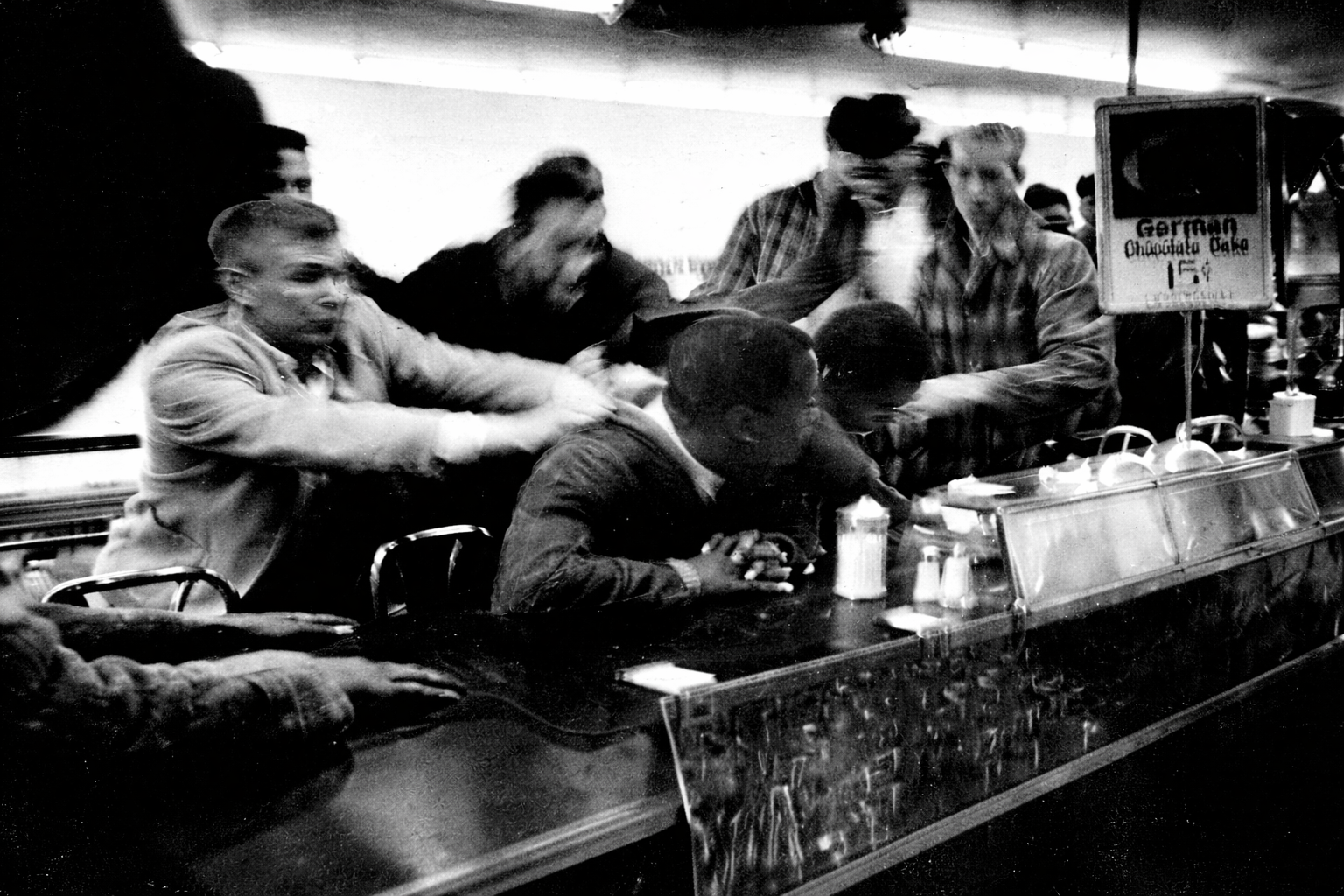
Violence is everywhere right now… or is it?
When you press people to define “violence,” you’ll often find that their grasp on the concept is slippery at best. We think we know what it means, but that certainty tends to evaporate the moment someone asks whether a slur counts as violence, or a system that denies you healthcare until you die counts as violence, or refusing to recognize someone’s existence does. A lot of our most heated disagreements about violence happen prior to the moral disagreements we may have which actions count as violent. Our core disagreements are conceptual ones, and we’re usually having them without realizing it.
What, if anything, ties physical force to structural oppression? Is there a definition of violence capacious enough to hold both together without becoming so broad it is evacuated of meaning altogether? When the word “violence” gets attached to something, what exactly are we expecting people to do — morally and politically?
In this episode, the HBS co-hosts work through these questions with many disagreements (but no fisticuffs!) along the way. They take up Hegel’s argument that recognition is a life-or-death struggle, and Hannah Arendt’s claim that violence is always a symptom of political failure. They look at the way entertainment media trains us to see violence as cleaner and more effective than it ever actually is, and how actions that involve “bodily harm” might constitute the easiest, but least satisfying, definition of violence. Leigh reflects on her year directing the M.K. Gandhi Institute Institute for Nonviolence and why she’s no longer the pacifist she was then. Jen, as past President of Concerned Philosophers for Peace, draws a sharp line between caring about peace and believing violence is never warranted. Meanwhile, Bob wonders why Americans are not more violently opposed to their lack of basic social securities, like healthcare.
This week’s jukebox picks:
- From Leigh: “Hit Me with Your Best Shot” by Pat Benatar
- From Jen: “With God on Our Side” by Bob Dylan
- From Bob: “Planet Claire” by The B-52s
In this episode, we reference the following thinkers, texts, ideas, etc.:
- Structural violence
- Iris Marion Young, “Five Faces of Oppression”
- G.W.F. Hegel, Phenomenology of Spirit — specifically the “Lordship and Bondage” section on recognition as a life-or-death struggle
- Hotel Bar Sessions Episode 105, “The Master/Slave Dialectic”
- Recognition (Stanford Encyclopedia of Philosophy)
- Hannah Arendt, On Violence
- Sigmund Freud and the death drive (Thanatos/aggression directed outward)
- Frantz Fanon and the justification of anti-colonial violence
- Stephen Pinker, The Better Angels of Our Nature: Why Violence Has Declined
- Metaphysical binaries and the argument that binary thinking is itself a structural precondition for violence
- Deconstruction
- Nonviolence and passive resistance
- Pacifism (Stanford Encyclopedia of Philosophy)
- Retributive justice vs. restorative models
- The social contract
- Vigilantism — the Bernard Goetz “subway vigilante” case (1984) and its contemporary echoes
- The ticking time bomb scenario and the ethics of torture
- Collateral damage
- The Greensboro sit-ins
- The psychology of violence and the fascination with violence
- Concerned Philosophers for Peace
- The M.K. Gandhi Institute for Nonviolence, (formerly in Memphis, TN, now in Rochester, NY)
Like and Follow Hotel Bar Sessions!
Stay current with our most recent episodes, behind-the-scenes updates, announcements, and more! Follow us on your favorite platforms below:
Support Us on Patreon!
Enjoying our conversations? Keep them going by supporting Hotel Bar Sessions on Patreon. Your support helps us bring fresh content, deeper discussions, and exclusive perks for our community.